

The vehicle is rarely the first decision to make when hiring a driver for business trip transportation. Start with the itinerary. A direct airport transfer, a day of meetings with several stops, and travel for a group each call for different planning, even if the trips cover similar distances.
Comfort and punctuality matter, but choosing by vehicle alone can leave the schedule unclear. Should you book a defined one-way trip or reserve a chauffeur by the hour? One-way transfers suit direct journeys, while hourly rentals can accommodate multiple appointments. Choose based on the stops, timing, and travelers involved.
This guide explains how to match the service format to your itinerary, select a sedan, SUV, or Mercedes Sprinter van based on passenger and luggage needs, and organize pickup, stops, and timing. With the right arrangement, transportation becomes a planned part of the trip instead of another moving piece to manage.
Key Takeaways
- When hiring a driver for business trip transportation, map the full schedule first so the service format reflects the actual stops and timing.
- Use a one-way or round-trip transfer for defined pickup and drop-off points. Consider hourly service when the itinerary includes multiple stops or flexible timing.
- Choose a sedan, SUV, or Mercedes Sprinter van based on the travelers, luggage, and purpose of the trip, not prestige alone.
- Prepare travel dates, pickup and destination points, timing, stops, passenger count, and luggage details before arranging transportation.
- Keep the decision sequence simple: outline the itinerary, select the service format, choose a suitable vehicle, and provide the trip details.
Hiring a Driver for a Business Trip: Start With the Travel Plan
Hiring a driver for business trip transportation means arranging a chauffeur and service vehicle around a work itinerary. The practical aim is to plan how travelers will get between an airport, hotel, meeting locations, and other scheduled stops without adding driving and parking tasks to the workday. A clear plan helps determine which transportation format fits.
Business travel can involve a single appointment or a sequence of commitments, as outlined in this Business Travel Overview. In either case, ground transportation can help organize transitions and leave travelers time to prepare, review materials, or reset between meetings. The right arrangement depends on the route and schedule, not just the destination.
Definition: A chauffeur-driven car service is a transportation booking that pairs a professional driver with a service vehicle for a traveler’s planned trip. It is a customer booking, not a job listing for someone seeking a travel-driver position.
Which business-trip transportation problem are you solving?
First, separate airport transportation from travel across the workday. An airport arrival or departure with a defined pickup and drop-off differs from a day that requires movement among several meetings. Note whether the route has one destination, several stops, or timing that may shift as appointments progress.
Then identify who is traveling and who is coordinating the booking. A solo airport transfer, a colleague’s pickup, and transportation for a group each involve different planning details. Before selecting a service format, the organizer should map the schedule, key locations, passenger count, and expected luggage.
What does chauffeur-driven service mean for a business traveler?
The booking includes both a professional driver and the vehicle used for the trip. The traveler rides as a passenger while transportation is organized around the stated itinerary. This differs from a self-drive rental or personal vehicle, where the traveler handles the driving and related logistics.
Search language can blur two different intentions. Someone looking for a chauffeur-driven booking needs transportation for a business itinerary. Someone searching for a travel-driver job is looking for employment. This guide addresses the first need: arranging a vehicle and driver for business travel, rather than recruiting or hiring an employee.
Before choosing a booking type, write down the essentials:
- Trip purpose: Airport transfer, meeting transportation, or both.
- Route: Pickup, destination, and any planned stops.
- Schedule: Fixed appointment times or a day with flexible timing.
- Travelers: Who will ride and what luggage they’ll bring.
These details create a useful foundation for matching transportation to the trip. Once the itinerary is clear, it’s easier to compare a defined transfer with service organized around time and stops.
One-Way Transfer or Hourly Driver Service: Match the Booking to the Itinerary
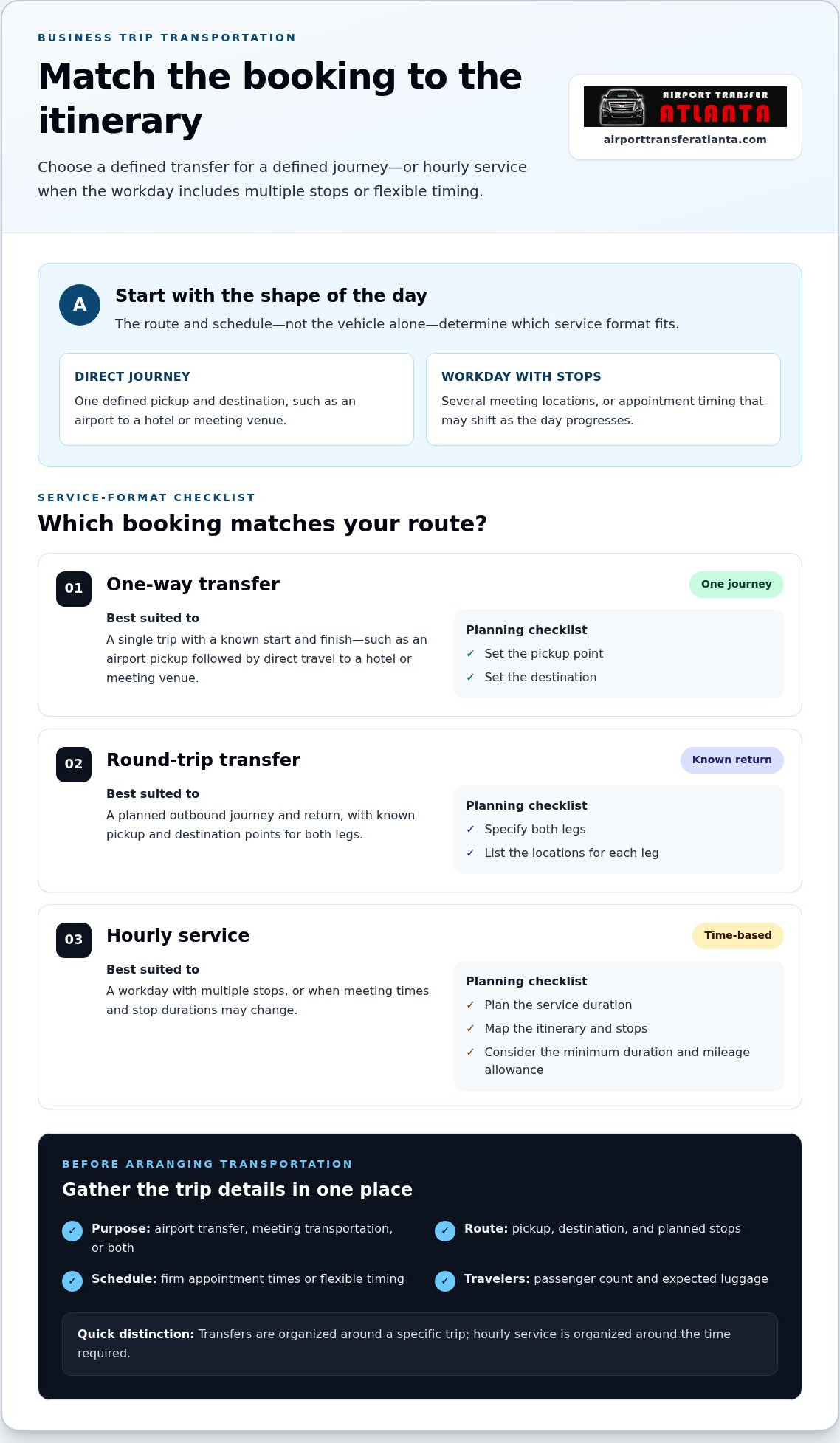
Choose the booking format based on how the day is structured. A defined route with a known pickup and drop-off usually fits a one-way transfer. A return journey with planned endpoints can be arranged as a round trip. If the workday involves several stops or timing may shift, hourly service centers the arrangement on the time required. The key difference is whether the booking is based on a specific trip or on time.
| Service format | Best suited to | Planning focus |
|---|---|---|
| One-way transfer | A single journey, such as an airport to a hotel or meeting venue | Set the pickup and destination |
| Round-trip transfer | A planned outbound journey and return with known points | Specify both legs and their locations |
| Hourly rental | A workday with multiple stops or timing that may change | Plan the service duration and itinerary |
When is a one-way or round-trip transfer the clearer fit?
Use a one-way transfer when the journey has a defined start and finish, such as an airport pickup followed by direct travel to a hotel or meeting venue. If no additional stops are expected, the route is straightforward to plan. A round trip suits a known return journey, such as travel from a hotel to a meeting location and back, when both legs have planned pickup and destination points.
When should a business traveler consider hourly service?
Hourly service can fit a day of appointments at different locations, especially when meeting times or stop durations may change. It is time-based and includes a minimum duration and mileage allowance, so consider both the expected schedule and route when planning. Airport travel may also be part of the itinerary. The professional airport limo service guide discusses airport-transfer considerations.
For a direct airport journey, this guide to hourly limo rental explains how that service format differs from a defined transfer. For business expense questions, review the IRS Guidelines on Business Travel Expenses. Tax treatment depends on the circumstances, so don’t assume a particular transportation booking is deductible based on its format alone.
Before selecting a service, list every planned stop and identify which appointment times are firm. If the trip is one direct journey or a clearly scheduled return, a transfer keeps the booking tied to those endpoints. If a driver is needed across a sequence of commitments, compare the itinerary with the hourly service’s minimum-duration and mileage-allowance structure. Airport Transfer Atlanta provides chauffeur-driven transportation for defined trips and time-based schedules.
Choose a Vehicle and Service That Fit the Business Trip
The right vehicle supports the itinerary; it isn’t simply a marker of status. Consider who is traveling, how much luggage they’ll bring, and whether the trip is a direct transfer or a series of appointments. When hiring a driver for business trip transportation, the practical goal is to choose a suitable vehicle and service format without adding unnecessary complexity.
A chauffeur-driven service provides both a professional driver and a service vehicle. That differs from arranging for a driver to operate a traveler’s personal vehicle. Vehicle selection, passenger needs, and trip logistics can be considered together rather than treating the car as an afterthought.
When might a business traveler choose a sedan, SUV, or van?
A sedan such as a Lincoln MKT or Cadillac XTS may suit individual or executive travel. An SUV, including a GMC Yukon XL or Cadillac Escalade, is another option to consider when passenger or luggage needs point to that vehicle category. For group transportation, a Mercedes Sprinter van offers a way for travelers to ride together. Match the choice to the trip, not prestige alone.
- Sedan: Consider for individual or executive trips with luggage needs suited to the vehicle category.
- SUV: Consider when the travelers’ or luggage requirements point toward an SUV.
- Sprinter van: Consider for group travel where coordinating transportation together is useful.
How should the itinerary influence the vehicle decision?
Start with the passenger count and luggage, then consider the journey’s purpose. A direct transfer may call for a different arrangement from a workday with multiple stops. Share those details when planning so the vehicle category and service format reflect the actual trip. For group travel, the Mercedes Sprinter rental guide provides more context on this vehicle option.
Chauffeur service may be more than a simple journey requires if there is little coordination involved. Weigh that against the tasks a traveler would otherwise handle, such as driving between appointments, managing parking, and monitoring the route. As the schedule grows more complex, arranging transportation around the itinerary can reduce those tasks and help organize transitions.
Before selecting a vehicle, use this checklist:
- How many people will travel?
- What luggage will they bring?
- Is the trip direct, or does it include several stops?
- Would the travelers benefit from traveling together?
Use the answers to narrow the vehicle category first. Then align the service format with the schedule: a defined transfer for a fixed route, or hourly service for a day organized around time and stops. This keeps the decision focused on passenger needs and itinerary demands rather than appearance alone.
Prepare the Itinerary to Keep Business Transportation Organized
A useful transportation plan starts with the full sequence of the trip, not just the first pickup. List airport arrivals or departures, hotel movements, meeting destinations, and other scheduled stops in chronological order. Mark which times are fixed and where the day may change. This makes it easier to see whether the schedule calls for a defined transfer or service arranged over a longer period.
Allow realistic time for transitions between appointments. Consider the expected travel between locations and the time travelers need to leave a meeting, collect belongings, or be ready for the next pickup. Avoid building a schedule that assumes every commitment will end exactly on time.
Build a practical business-trip transportation itinerary
Use this planning sequence to turn the trip outline into clear booking details:
- Map the trip: Put airport, hotel, and meeting movements in chronological order, including the pickup and destination for each leg.
- Mark timing: Record requested pickup times and appointment start times. Identify fixed commitments separately from parts of the day that may shift.
- Note travelers and luggage: Identify who is riding on each leg and what luggage they’ll bring. Passenger needs may differ between an airport transfer and meeting travel.
- Select the service format: Match defined routes to transfer planning and schedules with several stops or flexible timing to an hourly arrangement.
- Compile booking details: Include travel dates, pickup and destination points, timing, stops, passenger count, and luggage information.
A complete itinerary shows how each ride fits into the workday and gives the booking a clear basis.
Coordinate the booking with the traveler or travel arranger
Decide who will arrange transportation and who should receive travel-day updates. Share one final itinerary with the traveler and the person coordinating the booking, rather than relying on separate versions with different pickup details. Keep destination names and pickup instructions consistent across each leg, and identify a practical point of contact if the schedule changes.
Before travel, review the booking terms for the chosen service format. A transfer should reflect the intended route, while an hourly booking should correspond to the expected service period and itinerary. If a meeting location or timing changes during planning, update the itinerary before sharing the final version.
For a traveler or coordinator hiring a driver for business trip transportation, clear information reduces avoidable confusion. Include the date, scheduled pickup time, exact pickup and destination details, stops, travelers, and luggage. Keep a copy of the final plan accessible to the people responsible for the trip. A concise, shared itinerary gives everyone the same reference point.
Once the schedule and booking details are organized, the chauffeur-driven transportation service can be arranged around the trip’s planned movements.
Book Chauffeur-Driven Transportation for Your Next Business Trip
A clear reservation starts with four decisions: define the itinerary, select the service format, choose a vehicle, and provide the trip details. This sequence aligns transportation with the actual workday, whether the traveler needs a direct airport journey or a vehicle for a schedule with several stops. Hiring a driver for business trip transportation is easier to organize when the plan is specific before booking begins.
What to have ready before placing a booking
Gather the core details in one place. Include travel dates, pickup and destination points, requested timing, passenger count, luggage information, and every planned stop. Note which appointments have fixed start times and whether any part of the schedule may change. These details help connect the vehicle and service format to the trip.
Next, identify the structure of the transportation need:
- One-way transfer: A defined journey with a pickup point and destination.
- Round-trip transfer: Planned outbound and return journeys with known locations.
- Hourly rental: A schedule that calls for service over time, such as a day with multiple stops.
Then consider the travelers and what they’re bringing. A sedan, SUV, or Mercedes Sprinter van may suit different passenger and luggage needs, so share those details rather than selecting a vehicle by appearance alone. If the itinerary includes several destinations, list them in travel order. Clear sequencing helps prevent missed stops or conflicting instructions.
Turn the transportation plan into a reservation
Once the itinerary is assembled, submit the relevant details for the selected service. Keep pickup instructions, destination information, and timing consistent across the trip plan. If a travel arranger is booking for an executive or group, share the final itinerary with the traveler and designate a point of contact for updates. Before travel, review the booking terms so the arrangement reflects the intended route or service period.
One-way and round-trip transfers suit defined journeys. Hourly rentals are time-based and can fit a workday organized around multiple locations. Pair the format with a vehicle category that reflects the passengers and luggage, then provide the complete itinerary. This keeps the booking focused and the transportation plan organized.
With the dates, route, schedule, traveler details, and vehicle needs prepared, you can arrange chauffeur-driven business transportation for your itinerary.
Make Transportation Part of the Business-Trip Plan
Ground transportation works best when it’s treated as part of the itinerary, not a last-minute detail. Once the work schedule takes shape, match the ride plan to the traveler’s priorities and the day’s commitments. That planning step can make hiring a driver for business trip transportation more structured and keep attention on the purpose of the trip.
With your travel details ready, arrange chauffeur-driven transportation for your business trip. A clear plan gives the traveler and the transportation arrangement a solid starting point.
Frequently Asked Questions
Is hiring a chauffeur for a business trip different from hiring a driver for your own car?
Yes. Hiring a driver for business trip transportation through a chauffeur-driven service means the booking includes a professional driver and service vehicle. With a driver for your own car, the traveler supplies the vehicle. The distinction affects planning: for a chauffeur service, share passenger and luggage details along with the route so the vehicle suits the trip. Provide clear pickup instructions if someone other than the traveler is arranging the ride.
Can I arrange a driver for a business trip that does not include an airport?
Yes. Chauffeur-driven transportation can be arranged for work travel between an office, hotel, conference venue, or client location, even when no airport journey is involved. For example, a traveler with appointments at several venues can use an hourly rental rather than organize separate rides for each leg. Share the trip’s stops and timing so the transportation plan reflects the workday rather than an airport schedule.
Can I work during a chauffeur-driven business trip?
Travelers often use ride time to review meeting notes, prepare for a presentation, or catch up on routine work. Plan tasks that can be done comfortably as a passenger, and don’t assume the vehicle includes particular technology or work amenities. For confidential calls or sensitive documents, consider your company’s privacy practices and choose work that’s appropriate for the travel environment. Keep essential materials accessible before pickup.
How far in advance should I arrange business-trip transportation?
Arrange transportation once the travel dates and core itinerary are stable, rather than waiting until the day of travel. This gives the person booking time to provide accurate pickup points, timing, passenger details, and the preferred vehicle category. For a trip with several appointments, update the plan as locations are finalized. The appropriate lead time depends on the trip and booking circumstances, so no single timeline applies to every journey.
Should a company create a ground-transportation policy for business travel?
A written policy can help employees and travel arrangers make consistent decisions. It may define who can approve a booking, which details must be submitted, how travelers select between a direct transfer and hourly service, and how itinerary changes are communicated. Include a process for documenting business purpose and submitting expenses according to company procedures. Keep the policy practical, with clear steps employees can follow before each trip.
Is chauffeur-driven transportation suitable for client meetings?
It can be suitable when a meeting itinerary involves several participants, a formal arrival, or travel between multiple locations. A company can arrange transportation for a visiting client or for employees traveling to meet one. Choose the vehicle based on the travelers and their luggage, then provide the pickup and destination details clearly. Treat the ride as one part of the meeting plan, not a substitute for confirming the meeting arrangements.


