

What makes an airport ride feel first class: the vehicle, or knowing the trip is planned around your itinerary? A first class airport transfer service is about more than appearance. The arrangement should fit your route, timing, passengers, and luggage, with a clear understanding of how the service is priced.
Comfort matters, but it won’t solve a mismatch between the vehicle and your group or between the booking format and your plans. A direct airport trip may suit a one-way transfer, while multiple stops or time spent waiting may make an hourly chauffeur-driven rental a better fit. Vehicle choice matters too, with sedan, SUV, and Mercedes Sprinter van options for different travel needs.
This guide explains what to look for in a first-class experience, how to choose between point-to-point and hourly service, and how to match a vehicle to your party and luggage. It also covers the trip details to prepare before booking, including pickup and destination information, flight schedule, passenger count, luggage, and planned stops. With those details in hand, you can compare the options and choose a format that fits your journey.
Key Takeaways
- A first class airport transfer service combines a private chauffeur-driven ride with a format and vehicle suited to your itinerary.
- Choose a sedan, SUV, or Mercedes Sprinter van based on your passengers and luggage, not appearance alone.
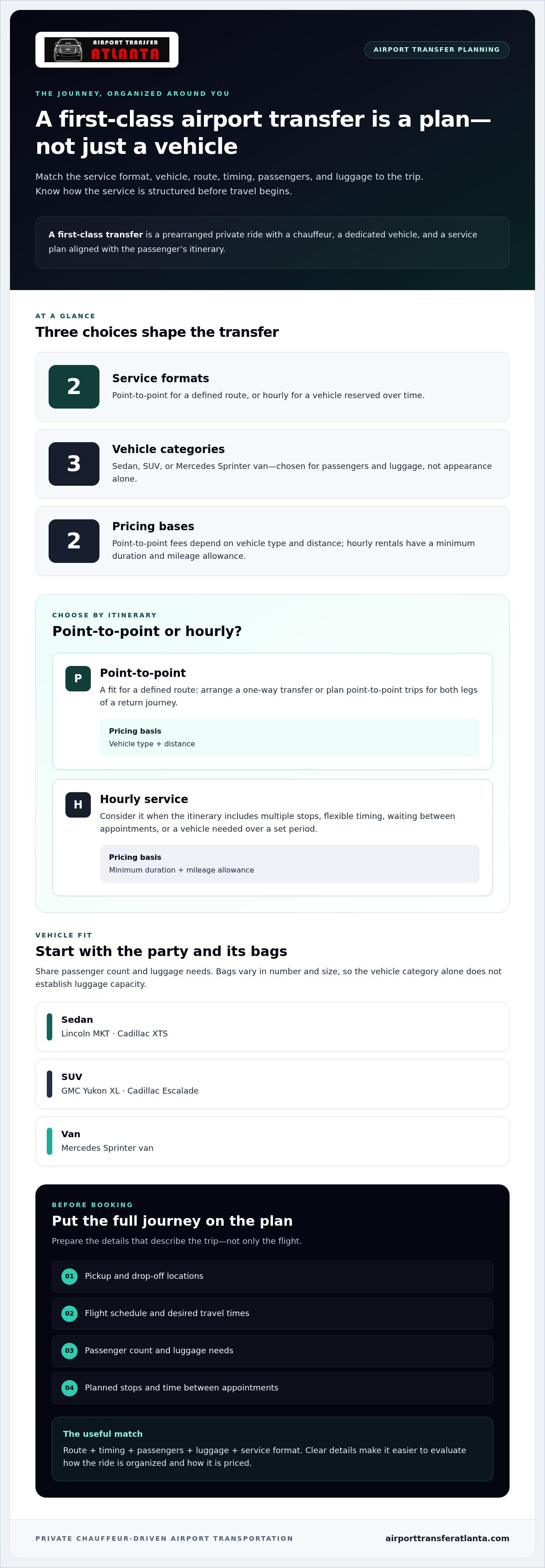
- Use one-way or round-trip point-to-point service for defined routes. Consider hourly service for itineraries with multiple stops or flexible timing.
- Understand the pricing basis: point-to-point fees depend on vehicle type and distance, while hourly rentals have a minimum duration and mileage allowance.
- Prepare your pickup and drop-off details, flight schedule, desired travel times, passenger count, luggage needs, and planned stops before booking.
What Makes a First-Class Airport Transfer Service Different?
A first-class transfer is private, chauffeur-driven airport transportation arranged around a passenger’s itinerary. The distinction is not simply a polished vehicle or a luxury label. It is the combination of a dedicated ride, a suitable vehicle, a defined service format, and a pricing basis you can understand before travel begins.
A first-class airport transfer is a prearranged private ride with a chauffeur, a dedicated vehicle, and a service plan aligned with the passenger’s itinerary. Use this definition to assess what you’re booking. Look beyond appearance and identify how the ride is organized: where it starts and ends, whether it includes a return trip or time on standby, and how the vehicle fits the group and its luggage.
What does first class mean in airport transportation?
In aviation, “first class” describes a distinct travel category, as outlined in First Class (Aviation). For ground transportation, the label alone doesn’t explain the arrangement. Privacy, a dedicated vehicle, and a chauffeur are concrete service elements. You can then assess comfort in context, including whether the vehicle and booking format suit your trip.
A private transfer is reserved for the traveling party, unlike shared transportation, where passengers may travel with other groups. The distinction is how the ride is structured. A private booking provides a vehicle for your itinerary, while a shared option follows a different arrangement. When comparing a first class airport transfer service, clarity about that difference matters as much as the vehicle’s finish.
Which traveler needs can a private transfer address?
Travel plans vary. One traveler may need a direct, one-way ride; another may want a planned return journey. A schedule with several stops or time between appointments may call for a vehicle over a set period. These needs align with point-to-point and hourly service formats, so consider the itinerary before choosing based on vehicle style.
For example, a traveler arriving for a meeting might arrange a direct airport pickup, then use an hourly booking to travel between several appointments. Someone with one destination and a scheduled return could plan point-to-point trips for both legs. Arranging transportation in advance makes it easier to incorporate the ride into the itinerary, but accurate trip details are still essential.
Comfort should support the trip, not define the decision on its own. A sedan may suit a smaller party with lighter luggage, while an SUV or Mercedes Sprinter van may better match a group or a larger amount of baggage. Start with passenger and luggage needs, then consider route and timing.
- Service format: Is the trip direct, a return journey, or vehicle use over time?
- Vehicle fit: Does the selected category suit the passengers and luggage?
- Pricing basis: Point-to-point fees depend on vehicle type and distance. Hourly rentals have a minimum duration and mileage allowance.
These practical details make a transfer easier to evaluate than a broad promise of luxury. A clear plan helps you understand what the service is designed to do and whether it matches the journey you have in mind.
Which Details Shape a Well-Organized First-Class Transfer?
A transfer is easier to plan when its practical details are clear: the vehicle category, itinerary, service format, and fare calculation. These elements work together. A vehicle that suits the passengers but not their luggage, for example, may not be the right fit for the trip.
A suitable transfer is defined by the route, timing, passenger and luggage needs, vehicle category, and pricing structure. Use those details to make the booking specific instead of relying on a general label such as “premium.”
How should the vehicle match passengers and luggage?
Start with the traveling party and its luggage, then compare vehicle categories. Sedan options include the Lincoln MKT and Cadillac XTS. The GMC Yukon XL and Cadillac Escalade are SUV options, while the Mercedes Sprinter van is another category to consider for group travel. Choose based on the trip’s practical requirements, not vehicle appearance alone.
Share the passenger count and luggage needs when arranging the ride. Bags vary in number and size, so these details help you decide whether a sedan, SUV, or van better suits the journey. Don’t assume that a vehicle’s category alone tells you how much luggage it will accommodate.
What should transparent transfer information explain?
Pricing depends on the service format. Point-to-point fees are based on vehicle type and distance, so the pickup and destination help define the trip. Hourly rentals use a different structure: they have a minimum duration and include a mileage allowance. Understanding these distinctions helps you compare the pricing basis without assuming that every transfer has the same rate or includes the same items.
Make the intended arrangement clear in your trip details. A defined route with a planned return differs from reserving a vehicle over time. If the schedule includes several stops or time between appointments, include those details rather than describing the trip only as an airport ride.
Which booking details make the plan clear?
Prepare the information that describes the journey, not just the flight. Include pickup and drop-off locations, flight schedule, desired travel times, passenger count, luggage needs, and planned stops. For a return trip, provide details for both legs. If you expect to use the vehicle over time, outline the schedule and intended duration so you can choose the hourly format appropriately.
Before booking, review the details as one complete plan:
- Route: Provide each pickup and destination, including return-trip locations.
- Timing: Share flight information and the travel times needed for the itinerary.
- Vehicle fit: State the number of passengers and describe the luggage.
- Service format: Identify whether the trip is point-to-point or requires hourly use.
For a first class airport transfer service, clear information supports a better match between the ride and your itinerary. If you’re planning a chauffeur-driven journey, review the airport transportation options alongside these details.
Point-to-Point or Hourly: Which Airport Transfer Fits Your Itinerary?
The best transfer format depends on how you’ll use the vehicle, not just which vehicle you select. A sedan or SUV can serve either a direct airport journey or an hourly itinerary, but the booking structure should match the trip. Decide whether you need transportation between defined locations or a chauffeur-driven vehicle for a set period by reviewing your route and schedule.
Compare the arrangements before choosing:
| Service format | Useful itinerary pattern | Pricing basis |
|---|---|---|
| One-way point-to-point | A single direct trip between specified locations, such as a pickup and an airport | Vehicle type and distance |
| Round-trip point-to-point | A planned journey to a destination with a defined return trip | Point-to-point basis for the specified travel |
| Hourly rental | Use of a chauffeur-driven vehicle over a set period, potentially with multiple stops | Hourly structure with a minimum duration and mileage allowance |
When does a point-to-point airport transfer make sense?
Choose point-to-point when the journey has a clear pickup location and destination. A one-way transfer fits a single trip, such as traveling from a pickup address to the airport. A round trip suits a planned return journey with specified locations for both legs. This structure works well when the route is defined and you don’t need the vehicle for additional travel between stops.
For example, a traveler heading to the airport for a departure can arrange a one-way ride. If transportation is also needed after returning, a round-trip plan can cover the outbound and return journeys. Point-to-point fees are based on vehicle type and distance, so the route and chosen vehicle determine the pricing basis.
When is an hourly chauffeur-driven rental more suitable?
Hourly service is designed for an itinerary that requires a chauffeur-driven vehicle over a set period rather than just for one direct route. It may suit a schedule with several appointments, stops, or waiting periods before the final destination. The rental has a minimum duration and includes a mileage allowance, so both time and expected travel distance shape the arrangement. Additional costs apply when the mileage allowance is exceeded.
Hourly service isn’t automatically cheaper or more suitable for every trip. A short, defined airport journey may fit point-to-point service better, while a schedule that keeps the vehicle in use may align with hourly rental. Consider the full itinerary, including stops and timing, before comparing formats.
Choose the service structure before settling on a vehicle. A first class airport transfer service should fit the journey as a whole: a direct ride, a planned return, or travel over time. Select a vehicle based on passenger and luggage needs, then choose the format that corresponds to the route and schedule. A refined vehicle can improve comfort, but it can’t determine whether the booking arrangement itself fits.
What Should You Prepare Before Booking a First-Class Airport Transfer?
A clear booking starts with the itinerary, then matches the service format and vehicle to the trip. Gather the details before reserving so the route, timing, passengers, and luggage are described consistently. This gives the transfer plan a practical foundation and helps you make the key choices before booking.
Prepare your travel date, transfer format, pickup and drop-off details, flight schedule, desired travel times, passenger count, and luggage information before reserving. Use this sequence to organize the information:
- Set the itinerary and transfer format. Decide whether you need a one-way trip, a planned round trip, or hourly service. For hourly service, outline the intended duration and how the vehicle will be used.
- Write down the route. Record pickup and drop-off details for each leg. For a return journey, include both directions rather than only the first destination.
- Gather flight and timing information. Note the scheduled flight details and the pickup time you want to plan around. Include desired travel times for any additional stops or return trip.
- Describe the traveling party. Provide the passenger count and a clear account of the luggage, including whether the group expects several bags or larger items.
- Choose a vehicle category. Consider whether a sedan, SUV, or van better aligns with the group and its luggage, then make sure the selection suits the itinerary.
Which itinerary details should travelers have ready?
Have the travel date, pickup and drop-off information, and flight schedule together before you book. State whether the ride is one-way or round-trip, and provide the intended pickup timing. If you’re arranging hourly service, outline the planned duration, stops, and other timing needs. A complete itinerary makes it easier to identify the service format that fits.
Keep the details consistent across each part of the journey. For example, if the outbound ride ends at the airport and the return ride begins there, list those locations and the relevant flight details for both legs. For an hourly itinerary, describe the order of stops and the time you expect to need the vehicle, rather than treating the booking as a single airport-to-destination transfer.
How can you match the booking to your group?
Match the vehicle category to both the number of travelers and their luggage. Sedan options include the Lincoln MKT and Cadillac XTS; SUV options include the GMC Yukon XL and Cadillac Escalade. The Mercedes Sprinter is a van option to consider for group travel. Share the group’s needs clearly rather than relying on assumptions about seating or luggage capacity.
Before submitting the details, review them as one plan. Check that the travel date, locations, flight schedule, timing, passenger count, and luggage information align. This simple review can reduce avoidable booking confusion, especially when one person is coordinating transportation for a group.
To organize your trip details around a suitable vehicle and transfer format, plan your airport transfer with your itinerary, timing, and group information prepared.
How Airport Transfer Atlanta Supports a First-Class Airport Journey
A well-planned airport journey starts with two decisions: how you’ll use the vehicle and which vehicle category fits your party. Airport Transfer Atlanta offers one-way and round-trip point-to-point transfers, as well as hourly chauffeur-driven rentals. The right format depends on the itinerary. A direct ride between specified locations calls for a different arrangement than a schedule that needs a vehicle over a period of time.
Which Airport Transfer Atlanta service format matches your trip?
Choose a one-way transfer for a single point-to-point journey, or a round trip when you have a planned return between specified locations. If your schedule includes multiple stops or requires a chauffeur-driven vehicle over time, hourly rental may fit better. Point-to-point fees are based on vehicle type and distance. Hourly rentals have a minimum duration and include a mileage allowance.
Make vehicle selection a practical decision too. Lincoln MKT and Cadillac XTS sedans offer options to consider for a smaller party or lighter luggage. GMC Yukon XL and Cadillac Escalade SUVs provide SUV options, while a Mercedes Sprinter van is an option for group and luggage needs. Include passenger and baggage details in your itinerary rather than choosing on appearance alone.
A first class airport transfer service brings the format, vehicle, route, and timing together in one clear plan. For a broader look at executive ground transportation, explore this professional airport limo service guide.
How can travelers move from planning to reservation?
Before reserving, gather the travel date, pickup and drop-off details, flight schedule, desired travel times, passenger count, luggage needs, and any planned stops. For round-trip service, organize details for both journeys. For hourly rental, outline the intended duration and how the vehicle will be used. These details help align the service format and vehicle category with the trip.
Review the itinerary once before submitting it. Confirm that locations and times are consistent, and that the selected vehicle category reflects both the travelers and their luggage. Keep the pricing structure in view: point-to-point service is based on distance and vehicle type, while hourly rental follows a time-based arrangement with a minimum duration and mileage allowance. This makes it easier to choose based on the whole trip rather than a single detail.
Explore Airport Transfer Atlanta’s transfer options and prepare your itinerary, timing, and passenger details to select an arrangement suited to your journey.
Make Your Next Airport Journey Easier to Plan
The value of a first class airport transfer service starts with a plan that reflects how you’ll travel. Before choosing, decide whether your priority is a direct journey, a return trip, or chauffeur-driven transportation over time. Then consider what will make the ride work for your party, including vehicle category and luggage needs.
Airport Transfer Atlanta offers one-way and round-trip transfers, plus hourly chauffeur-driven rentals with a minimum duration and mileage allowance. The vehicle options include sedan, SUV, and Mercedes Sprinter van service categories. Use your itinerary to guide the choice, and have your travel date, pickup and drop-off details, flight schedule, timing, passenger count, and luggage information ready.
A little preparation helps turn travel plans into a clear transportation arrangement. Explore first-class airport transfer options and take the next step toward organizing a ride that fits your journey.
Frequently Asked Questions
What is a first-class airport transfer service?
A first class airport transfer service is a private, chauffeur-driven ride arranged for a specific travel plan. In practice, the booking identifies the route, timing, and vehicle category rather than treating the ride as an unspecified trip. For example, a traveler with a flight departure and several bags can select a vehicle and service format around those needs. The term “first-class” alone doesn’t define every booking detail.
Is a first-class airport transfer the same as a limousine service?
Not exactly. “Limousine service” describes a type of chauffeur-driven transportation, while “airport transfer” describes a trip purpose or route. A limousine or other private vehicle can be used for airport transportation, but the label doesn’t specify whether the booking is point-to-point or hourly. Airport Transfer Atlanta provides limousine and car services, with vehicle options including sedans, SUVs, and Mercedes Sprinter vans.
Can I book a first-class airport transfer for a round trip?
Yes. Airport Transfer Atlanta offers round-trip airport transfers between specified locations. This can suit a traveler who wants transportation arranged for both the departure and return portions of a journey. Have the details for each leg ready, including the travel date, pickup and destination, and relevant flight schedule. Keeping both directions organized helps distinguish a return plan from a single one-way booking.
How much does a first-class airport transfer service cost?
The cost depends on the service format and trip details, so there isn’t one rate that applies to every booking. Point-to-point pricing is based on vehicle type and distance. Hourly chauffeur-driven rentals are based on time, have a minimum duration, and include a mileage allowance. To understand the pricing basis for your itinerary, organize the route or planned rental duration and the vehicle category you need.
What vehicle should I choose for an airport transfer?
Choose a vehicle by considering the number of travelers, luggage, and journey requirements together. The options include Lincoln MKT and Cadillac XTS sedans, GMC Yukon XL and Cadillac Escalade SUVs, and Mercedes Sprinter vans. For instance, a group traveling with several bags may want to consider an SUV or van rather than choosing solely by style. Share passenger and luggage details when arranging the ride.
When should I choose an hourly airport car service instead of a one-way transfer?
Consider hourly service if your plans require a chauffeur-driven vehicle for a period of time, such as travel between several appointments or stops before the final destination. A one-way transfer is structured for a single trip between specified locations. Hourly rentals have a minimum duration and mileage allowance, so consider both the expected time and distance. The right option depends on how your itinerary uses the vehicle.


