

What if a single unscheduled detour could derail your entire travel itinerary? Many travelers assume that adding a stop to my airport transfer is a simple request that a driver can handle on the fly, but without professional coordination, this small change often leads to missed flights and unexpected fees. You need a solution that balances the convenience of a multi-destination trip with the rigid schedule of an airline terminal.
It's stressful to worry about whether your vehicle has enough capacity for extra luggage or if a quick pickup will turn into a costly delay. You deserve a seamless, one-vehicle solution that offers transparent pricing and absolute punctuality. This guide will help you master the logistics of multi-stop itineraries so your transportation remains efficient and predictable.
We'll examine how to select the right vehicle class, such as a luxury Mercedes Sprinter for larger groups, and how to manage wait time grace periods effectively. You'll learn the difference between point-to-point deviations and hourly service models to ensure your arrival at the terminal is perfectly timed. This professional approach eliminates the anxiety of complex scheduling and keeps your travel day on track.
Key Takeaways
- Distinguish between planned stops and spontaneous route diversions to maintain the integrity of your travel schedule and avoid unnecessary delays.
- Select an Hourly Limo Rental for complex, multi-destination itineraries rather than a standard point-to-point transfer to ensure maximum flexibility.
- Provide exact addresses and duration estimates during the booking phase to allow dispatchers to optimize the route for punctuality.
- When considering the logistics of adding a stop to my airport transfer, verify that your vehicle, such as a GMC Yukon XL or Mercedes Sprinter, has sufficient capacity for intermediate luggage loading.
- Utilize professional fleet management services that monitor real-time traffic to ensure a seamless transition between multiple stops and the final terminal arrival.
The Difference Between a Quick Stop and a Route Diversion
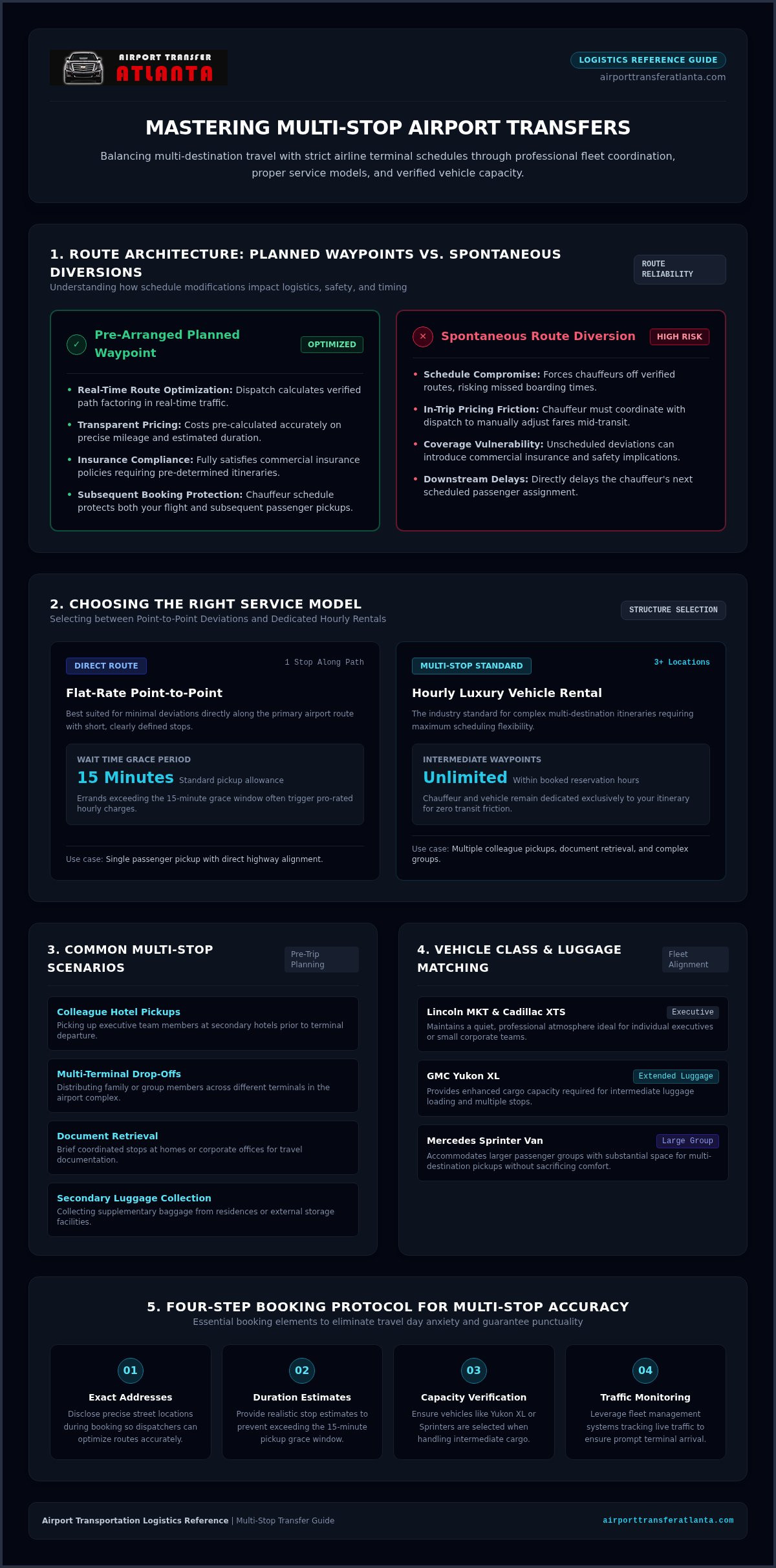
Professional airport transportation relies on precision. A stop in this context isn't just a pause; it's a logistically calculated event that requires specific timing and coordination. A professional stop is a pre-arranged waypoint with a specified duration. If you're researching the process of adding a stop to my airport transfer, it's vital to understand how these waypoints differ from spontaneous route diversions. A planned stop allows the dispatch team to account for traffic, vehicle capacity, and terminal arrival times. Spontaneous diversions force a chauffeur to deviate from a verified route, which can compromise the entire schedule and lead to missed flights.
Reliability is the cornerstone of high-end service. Chauffeurs often have subsequent bookings immediately following your drop-off. If a stop isn't logged in the system, it doesn't just affect your flight; it impacts the next passenger's pickup. Precise coordination is why professional fleet management is essential for maintaining punctuality across a large volume of transfers. By defining these waypoints early, you ensure the chauffeur can navigate the most efficient path to the terminal.
Planned Stops vs. On-the-Fly Requests
Disclosing every destination during the initial booking process ensures your pricing remains transparent. Professional services calculate costs based on mileage and estimated time. If you request a last-minute change, the chauffeur may need to contact dispatch to adjust the fare, creating friction during your trip. Additionally, unscheduled diversions can present safety and insurance implications. Commercial insurance policies often require drivers to follow a pre-determined itinerary to ensure full coverage for all passengers and luggage. Adding a stop to my airport transfer is most efficient when integrated into the initial reservation to maintain these safety standards.
Common Scenarios for Multi-Stop Transfers
Complex itineraries are standard for executive and group travel. You might need to pick up colleagues at a secondary hotel before heading to the terminal. In these cases, using a Lincoln MKT or Cadillac XTS ensures a professional atmosphere for your team. For larger groups, a Mercedes Sprinter Van provides the necessary space for multiple pickups without sacrificing comfort.
Other common scenarios include:
- Dropping off family members at different terminals within the same airport complex.
- Picking up essential travel documents from a home or office.
- Collecting additional luggage from a secondary residence or storage facility.
Each of these actions requires specific time allocations to ensure you reach the gate before boarding begins. Managing these stops through a professional service ensures that every minute is accounted for in the travel plan.
Choosing the Right Service Model for Multi-Stop Itineraries
Selecting the correct booking structure is the most critical decision for maintaining a professional travel schedule. While a standard One Way Airport Transfer is efficient for direct transit, it becomes less practical as the number of waypoints increases. The logistical complexity of adding a stop to my airport transfer requires you to evaluate whether your itinerary requires a simple pause or a dedicated vehicle for a specific duration. Choosing the wrong model often leads to fragmented communication and unnecessary wait time fees.
When to Use Flat-Rate Point-to-Point Service
Point-to-point service is ideal for stops that occur directly along the primary route. If you are picking up a passenger at a location that adds minimal mileage to the total trip, a flat-rate model with a specific stop fee is usually the most functional choice. However, this model has strict limitations. Most professional services apply a 15-minute grace period for pickups, but errands that exceed this window often trigger pro-rated hourly charges. If your stop involves document retrieval or a quick office visit, you must ensure the duration is strictly managed to avoid disrupting the chauffeur's next scheduled assignment.
The Advantages of Hourly Luxury Vehicle Rentals
For itineraries involving three or more locations, an hourly limo rental is the industry standard. This model provides unlimited stops within a set timeframe and mileage allowance. It eliminates the anxiety of monitoring the clock during a business meeting or a complex group pickup. The chauffeur remains on-site, providing a secure environment for luggage and a constant point of contact for the traveler.
A common logistical question is whether to book two separate transfers or one continuous hourly session. If the time between stops is less than two hours, a "wait and return" scenario managed via an hourly booking is superior. It ensures the same chauffeur and vehicle remain dedicated to your party. Booking two one-way transfers often results in two different drivers, which doubles the risk of a late arrival at the second location. When you consider the cumulative fees of multiple one-way bookings and the potential for availability gaps, the hourly model offers better transparency and reliability. It guarantees that a high-capacity vehicle, like a GMC Yukon XL or a Mercedes Sprinter, is waiting the moment you are ready. For those planning a complex trip, you can view our professional fleet to match a vehicle to your specific multi-stop needs.
How to Efficiently Add a Stop to Your Reservation
Precision in booking is the difference between a smooth transfer and a logistical failure. When you're adding a stop to my airport transfer, don't just provide a general area or a building name. You must provide the exact street address, including suite or apartment numbers, for every waypoint. This data allows the dispatch system to calculate the most efficient route and account for specific traffic patterns. You also need to estimate the duration of the stop. A five-minute passenger pickup is handled differently than a twenty-minute errand. Finally, communicate the passenger count for each leg of the journey. If you pick up colleagues halfway through, the vehicle must have the capacity to accommodate them comfortably without exceeding safety limits.
Coordinating Group Pickups and Drop-offs
Coordinating multiple passengers at different locations requires a structured approach. Use this checklist to ensure every leg of the trip is managed efficiently:
- Finalize the exact pickup sequence to minimize backtracking and unnecessary mileage.
- Ensure the selected vehicle, such as a GMC Yukon XL or Cadillac Escalade, has sufficient seating and luggage capacity for the maximum passenger count reached during the trip.
- Establish a clear communication protocol where the lead passenger shares the chauffeur's contact details with those being picked up at intermediate stops.
This structure prevents confusion and ensures the chauffeur can maintain the schedule without waiting for passengers who aren't ready. It's especially important for group travel where timing at the first stop dictates the success of all subsequent waypoints.
Updating an Existing Reservation
Plans change; however, modifying a professional transfer requires specific lead times. Most high-end services require at least 24 hours' notice for significant itinerary changes to ensure vehicle availability. While some platforms offer online amendments, calling professional limo companies directly is often faster and more reliable. A phone call allows you to speak with a dispatcher who can immediately verify fleet availability and adjust the chauffeur's schedule in real-time. This is vital during peak hours or major events when the fleet is fully booked. Always confirm the final updated itinerary through a digital confirmation to ensure the chauffeur has the most current instructions for adding a stop to my airport transfer.
Managing Wait Times and Pricing for Mid-Trip Stops
Professional services utilize a more structured approach to time management than standard ride-sharing apps. When you're adding a stop to my airport transfer, the chauffeur isn't just waiting; they're managing a complex timeline that leads to your terminal gate. Professional chauffeurs prioritize punctuality by building buffers into multi-stop routes. This ensures that a minor delay at an intermediate waypoint doesn't result in a missed flight. If a stop duration exceeds the pre-arranged window, it directly impacts the vehicle's availability for subsequent clients, which is why transparent billing for wait time is standard practice.
The impact of stop duration on your arrival time is significant. Every minute spent stationary is a minute not moving toward the terminal. Dispatchers monitor these durations in real-time to adjust route recommendations if traffic patterns shift during the stop. This level of oversight ensures the "on-time" guarantee remains intact even when your itinerary includes multiple diversions.
Understanding Wait Time Grace Periods
Industry standards for en-route stops typically include a 15-minute grace period. This is distinct from airport arrival grace periods, which are often longer to account for luggage carousels and customs. Once this initial window expires, professional services pro-rate the vehicle's hourly rate in 15-minute increments. This ensures you only pay for the time you actually use while compensating for the vehicle's time off the road. It's vital to distinguish between a "quick drop" and a "stop." A drop-off involves a passenger exiting the vehicle immediately, whereas a stop involves the vehicle remaining stationary while the passenger completes an errand or waits for a colleague.
Luggage Logistics for Multi-Stop Groups
One of the most overlooked aspects of multi-destination travel is the physical volume of baggage. Picking up three colleagues at different hotels might seem simple, but if each passenger has two checked bags, a standard sedan like the Cadillac XTS will reach capacity quickly. You must plan for the maximum luggage volume expected at the final leg of the trip. For group pickups, the GMC Yukon XL provides significant cargo space, but the Luxury Mercedes Sprinter Van remains the premier choice for maximum efficiency.
The Sprinter allows for rapid loading and unloading without the need to stack bags precariously, which protects your belongings and speeds up the transition between stops. You can review specific seating and cargo dimensions in our Mercedes Sprinter buying guide to ensure your vehicle matches your group's needs. Managing the physical logistics of adding a stop to my airport transfer is just as important as the schedule itself. To secure a vehicle with the right capacity for your next multi-stop trip, book your professional transfer today.
Why Professional Fleet Management Simplifies Complex Airport Travel
Professional fleet management is the engine behind every successful multi-stop itinerary. A dedicated dispatcher monitors traffic patterns and route efficiency in real-time, allowing the chauffeur to focus entirely on the driving experience. When you're adding a stop to my airport transfer, this backend support ensures that unforeseen road closures or congestion don't compromise your schedule. You gain the peace of mind that comes from a single point of contact, eliminating the need to coordinate with multiple drivers or handle fragmented bookings through various apps.
Consistency is a hallmark of professional service. Whether you choose a sedan, an SUV, or a luxury van, the standards for vehicle cleanliness and chauffeur conduct remain identical. Airport Transfer Atlanta handles logistical modifications by integrating every waypoint into a centralized management system. This ensures that the chauffeur, the dispatcher, and the client are all working from the same verified itinerary. This structured approach is what separates a professional service from a standard ride-share option.
Executive Sedan vs. SUV for Multi-Stop Trips
Choosing the right vehicle depends on your party size and the nature of your stops. The Lincoln MKT or Cadillac XTS Sedan Service is the efficient choice for solo travelers or executives making a single office stop. These vehicles offer a discreet, professional environment for mid-trip work. For families or small teams, the GMC Yukon XL or Cadillac Escalade SUV Service provides the versatility needed for multiple passenger pickups. These high-capacity vehicles ensure that everyone has ample legroom and that the chauffeur can manage luggage loading efficiently at every waypoint. Regardless of the vehicle class, you'll receive a chauffeur who adheres to the highest professional standards of conduct.
The Final Leg: Ensuring a Timely Airport Arrival
The most critical phase of a multi-stop trip is the transition from the last waypoint to the terminal. Professional software calculates a "drop-dead" departure time for the final stop, accounting for airport security wait times and terminal congestion. Chauffeurs use their deep experience in navigating specific airport logistics, such as designated commercial loading zones, to ensure you're dropped off as close to your check-in counter as possible. This precision eliminates the frantic rush often associated with complex travel days when adding a stop to my airport transfer. You can rely on a structured process that prioritizes your flight schedule above all else. To secure your itinerary, book your multi-stop airport transfer with Airport Transfer Atlanta and experience the efficiency of professional logistics.
Mastering Your Multi-Stop Travel Strategy
Efficient travel requires more than just a vehicle; it demands a structured logistical plan. By distinguishing between simple waypoints and complex diversions, you ensure your schedule remains intact. Selecting the right vehicle from a luxury fleet, such as a Lincoln MKT for solo errands or a Mercedes Sprinter for group pickups, provides the physical capacity needed for a seamless trip. When you prioritize expert logistical coordination, adding a stop to my airport transfer becomes a predictable part of your itinerary rather than a source of stress.
Reliability is built on professional chauffeurs who adhere to national service standards and dispatchers who monitor real-time traffic. This level of oversight guarantees that every leg of your journey is timed to meet your departure for the terminal. You don't have to manage these complexities alone. With a single point of contact and transparent pricing, your multi-destination trip can be as efficient as a direct flight.
Schedule your professional multi-stop transfer today to experience the peace of mind that comes from seasoned transportation experts. Safe and punctual travels await.
Frequently Asked Questions
Can I add a stop to my airport transfer after I have already booked?
Yes, you can modify an existing reservation by contacting the dispatch team directly. It's best to provide at least 24 hours' notice to ensure vehicle availability and schedule adjustments. Last-minute changes are subject to the chauffeur's current itinerary and fleet capacity. When you're adding a stop to my airport transfer after booking, a revised confirmation will be sent to reflect the updated route and transparent pricing details.
How much does it cost to add an extra stop to my car service?
The cost for an additional stop is calculated based on the distance deviated from the original route and the time required. Professional services use transparent flat-rate or mileage-based pricing models rather than metered fares. Factors such as vehicle type and the duration of the stop influence the final total. You'll receive a specific quote during the modification process to ensure there are no surprises on your final invoice.
Is there a limit to how many stops I can add to my itinerary?
There is no technical limit to the number of waypoints you can include, but the service model changes for complex trips. While a One Way Airport Transfer handles one or two quick stops efficiently, itineraries with three or more stops are better suited for an Hourly Limo Rental. This ensures the chauffeur remains dedicated to your party for the duration, providing flexibility without the need for multiple separate bookings.
Will adding a stop make me late for my flight?
Adding a stop won't make you late for your flight if the logistics are managed by a professional dispatcher. The team uses specialized software to calculate "drop-dead" departure times, building in buffers for traffic and airport security. By disclosing all waypoints during the booking phase, you allow the chauffeur to optimize the route. This proactive coordination ensures you arrive at the terminal with ample time for check-in.
Do I need to book an hourly rental if I only have one quick stop?
An hourly rental isn't necessary for a single, brief stop that occurs along your primary route. A point-to-point transfer is the most functional choice for a quick passenger pickup or a short errand. However, if the stop involves a significant route deviation or requires the chauffeur to wait for more than 15 minutes, the system may transition the booking to an hourly rate to ensure dedicated service and transparent billing.
How long will the chauffeur wait at an intermediate stop before extra fees apply?
Chauffeurs typically provide a 15-minute grace period at intermediate stops before additional wait time fees are applied. This industry-standard window allows for quick pickups or brief errands without impacting the fare. Once this period expires, wait time is billed in 15-minute increments based on the vehicle's pro-rated hourly rate. This structure ensures that the vehicle remains available for your specific itinerary while compensating for the time off the road.
Can I pick up extra passengers at my additional stop?
You can pick up extra passengers at an additional stop as long as the total count doesn't exceed the vehicle's seating capacity. When adding a stop to my airport transfer for group pickups, you must disclose the passenger and luggage count for each leg. If your group grows mid-trip, upgrading to a GMC Yukon XL or a luxury Mercedes Sprinter ensures everyone travels comfortably and safely with their baggage.
What happens if my stop takes longer than I originally estimated?
If a stop exceeds your original estimate, the service will apply pro-rated hourly fees to the final total. The dispatcher monitors the vehicle's location and timing in real-time to manage the chauffeur's subsequent assignments. While buffers are built into the schedule, significant delays may require the team to adjust the route or departure time for the final leg to ensure you still reach the airport terminal on time.


