

Is your arrival at a critical board meeting or a departing flight worth the risk of an algorithm's last-minute cancellation? While on-demand apps offer convenience for casual trips, the logistical gap between a professional licensed chauffeur vs rideshare becomes clear when punctuality is non-negotiable. You've likely experienced the frustration of a driver canceling minutes before pickup or entering a vehicle that doesn't meet professional standards. Many travelers now ask if a professional service is worth the investment over a standard app for their high-stakes travel needs.
This 2026 reliability guide details the essential differences in safety protocols, vehicle maintenance, and service accountability to help you make an informed choice. You'll discover how structured transportation models provide the peace of mind that comes from guaranteed pickups and predictable service. We'll examine why flat-rate pricing and rigorous driver vetting offer a superior alternative to the unpredictability of crowdsourced apps, ensuring your travel remains efficient, private, and secure.
Key Takeaways
- Understand the fundamental operational differences when comparing a professional licensed chauffeur vs rideshare, including career-level vetting and professional accountability.
- Learn why commercial livery insurance and rigorous fleet maintenance schedules provide a layer of security that personal auto policies cannot offer.
- Discover how pre-scheduled transfers and proactive flight tracking eliminate the logistical risks associated with on-demand rideshare apps.
- Identify the specific vehicle standards of a professional fleet, such as the Lincoln MKT or GMC Yukon XL, that ensure consistent cleanliness and passenger comfort.
- Master a decision-making framework for choosing between flat-rate transfers and hourly rentals based on your itinerary complexity and group size.
Chauffeur vs. Rideshare: Defining the Standards of Professionalism
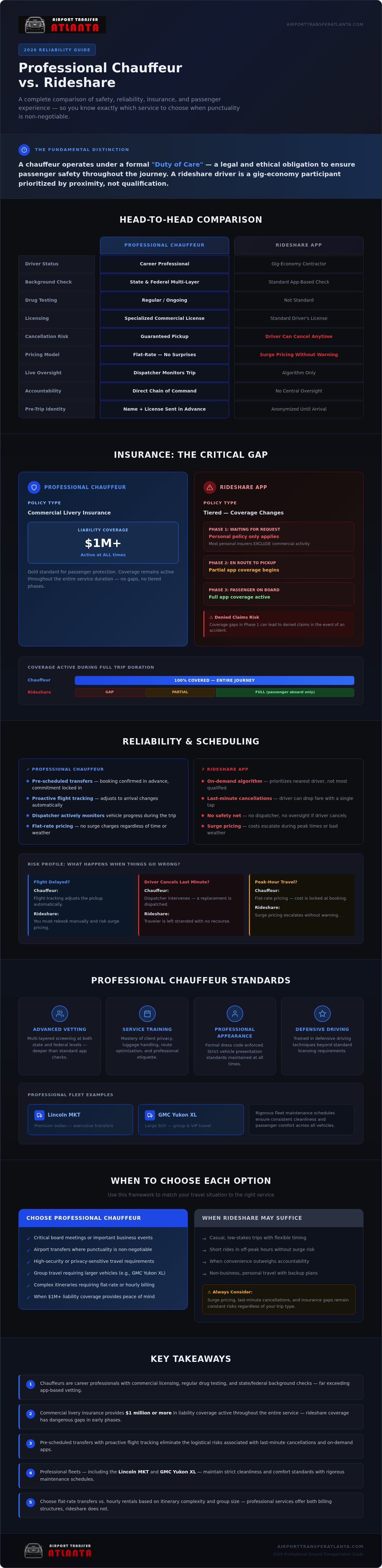
The choice between a professional licensed chauffeur vs rideshare involves more than comparing mobile apps to traditional bookings. It centers on the fundamental distinction between a career professional and a gig-economy participant. A chauffeur operates under a formal framework known as "Duty of Care." This is a legal and ethical obligation to ensure the safety, security, and well-being of the passenger throughout the journey. While rideshare apps offer a transactional experience based on proximity, professional ground transportation provides a structured service designed for reliability. This creates a psychological peace of mind that on-demand algorithms cannot replicate.
The Definition of a Professional Licensed Chauffeur
A professional licensed chauffeur is a career driver who has met rigorous standards far exceeding those of a standard personal driver. These requirements often include specialized commercial licensing, regular drug testing, and extensive background checks conducted at both the state and federal levels. Beyond the legalities, a chauffeur is trained in professional etiquette and defensive driving. They don't just navigate a vehicle; they manage the entire logistical flow of the trip. Unlike the independent contractor status found in rideshare models, professional chauffeurs are typically part of a managed fleet system. This ensures a direct line of accountability between the driver, the transportation company, and the client.
Professional standards in this field include:
- Advanced Vetting: Multi-layered screening processes that go deeper than standard app-based checks.
- Service Training: Mastery of client privacy, luggage handling, and route optimization.
- Professional Appearance: Adherence to a formal dress code and vehicle presentation standards.
The Limitations of the Gig-Economy Model
The gig-economy model relies on an on-demand algorithm that prioritizes the nearest available driver over the most qualified one. This introduces significant variability into the travel experience. One of the most prominent issues is surge pricing. During peak travel times or inclement weather, rideshare costs can escalate without warning. Furthermore, the lack of central oversight means there's no safety net when a driver cancels a trip. If a rideshare driver decides a route is inconvenient, they can drop the fare with a single tap, leaving the traveler stranded. Professional services eliminate this uncertainty through scheduled bookings and flat-rate pricing. When you book a professional transfer, the commitment is locked in, and a dispatcher monitors the vehicle's progress to ensure the pickup happens exactly as planned.
Safety and Security: Analyzing Commercial Insurance and Vetting
Safety is a primary metric when evaluating a professional licensed chauffeur vs rideshare. In a professional setting, you receive the chauffeur's name, commercial license number, and verified credentials well before the vehicle arrives. This transparency eliminates the anonymity inherent in app-based services where drivers are often unvetted for high-security environments. Professional firms maintain a direct chain of command, ensuring every driver is an accountable professional rather than a random participant in a gig economy. Commercial Livery Insurance is the gold standard for passenger protection. It provides a dedicated layer of financial security that personal policies aren't designed to handle.
Insurance Gaps in Ridesharing
Rideshare apps operate on a tiered insurance structure that changes based on the driver's activity. Coverage fluctuates depending on whether the driver is waiting for a request, en route to a passenger, or has a passenger in the car. These rideshare insurance coverage gaps often mean that during the initial phase, only the driver's personal policy applies. Most personal insurance providers exclude commercial activity, which can lead to denied claims in the event of an accident. Conversely, professional limo companies maintain comprehensive commercial livery policies. These policies typically offer $1 million or more in liability coverage that remains active at all times. This structure ensures that both the passenger and their property are protected throughout the entire service duration.
Vehicle Maintenance and Inspection Standards
The maintenance gap in a professional licensed chauffeur vs rideshare comparison is significant. A rideshare vehicle is essentially a personal asset used for work, meaning the level of upkeep is entirely at the driver's discretion. There's no centralized oversight to ensure the brakes, tires, or safety systems are inspected daily. Professional services utilize a rigorous fleet management system where vehicles like the GMC Yukon XL undergo frequent safety checks and meticulous maintenance schedules. This is the standard expected of a luxury black car service. Vehicles are retired from the fleet after reaching specific mileage or age thresholds to maintain mechanical integrity. Professional firms also enforce strict cleanliness standards, ensuring each vehicle is detailed between bookings. If you prioritize safety and vehicle quality, booking a One Way Airport Transfer provides the consistency that on-demand apps lack.
Reliability and Punctuality: Scheduling vs. On-Demand Uncertainty
Reliability is the primary metric for time-sensitive travel. When evaluating a professional licensed chauffeur vs rideshare, the core difference lies in the logistical infrastructure. Rideshare apps function on a probability model, assuming a driver will be nearby and willing to accept your request. Professional transportation operates on a commitment model. A scheduled service ensures a specific vehicle is assigned to your itinerary well in advance. This removes the variable of "nearby availability" and replaces it with guaranteed performance. For high-stakes events like international departures or corporate presentations, this logistical certainty is essential.
The Fallacy of On-Demand Punctuality
The "5 minutes away" notification in a rideshare app is often a logistical estimate rather than a promise. Algorithms prioritize proximity, but they cannot account for a driver's personal choice to cancel a fare if a more lucrative opportunity appears or if traffic looks daunting. These last-minute cancellations can derail a carefully planned travel itinerary. In the rideshare model, there is no backup system. If your driver cancels, you're forced back into the queue. A professional service eliminates this risk. Because the trip is pre-arranged and the driver is a professional employee, the pickup is a firm obligation. There is no "cancel" button for a chauffeur who is already assigned to your route.
Professional Dispatch and Flight Tracking
A premium airport car service utilizes advanced dispatch software to monitor air traffic in real-time. This technology allows the company to adjust pickup times automatically based on actual arrival data. If your flight is delayed by two hours or arrives thirty minutes early, your chauffeur is already aware and waiting. This proactive management is handled by a professional dispatcher who acts as a silent partner in your journey. They coordinate with the driver to navigate road closures or heavy traffic before they become an issue for the passenger.
The "meet and greet" service further enhances this reliability. Instead of wandering through a crowded terminal searching for a specific car in a busy rideshare zone, you're met at baggage claim by a professional holding a sign. This streamlined transition is particularly valuable in unfamiliar airports. Additionally, the flat-rate pricing model ensures the driver's focus remains entirely on your comfort and the safest route. They aren't distracted by an app "pinging" for their next fare or rushing to finish your trip to increase their hourly volume. Their only objective is to deliver you to your destination with precision and care.
The Passenger Experience: Fleet Quality and Professional Standards
The physical environment of your journey represents a significant divergence when comparing a professional licensed chauffeur vs rideshare. While high-tier rideshare options promise a luxury experience, the actual vehicle delivered remains an algorithmic variable. In contrast, a professional fleet consists of late-model, purpose-built vehicles like the Lincoln MKT or Cadillac XTS. These sedans are maintained to specific aesthetic and mechanical benchmarks that ensure a consistent environment for every trip. This consistency is not just about aesthetics; it's about the functional reliability of a vehicle that is cleaned and inspected after every fare.
Vehicle Consistency and Specification
A primary advantage of a dedicated black car fleet is the predictability of the asset. Corporate travelers require a specific image and level of comfort that a personal vehicle, regardless of its make, cannot consistently provide. For larger parties, the limitations of on-demand apps become even more apparent. A mercedes sprinter rental with driver is often the only viable solution for high-capacity group travel. It offers standing room and dedicated luggage space that standard SUVs lack. For executive groups, the GMC Yukon XL provides a level of utility and road presence that ensures a secure, comfortable journey with ample room for equipment or luggage.
The Chauffeur as a Professional Facilitator
The chauffeur's role extends beyond the steering wheel. They act as a logistical facilitator who understands the specific layouts of airport terminals and baggage claim areas. This expertise allows for a seamless "curb-to-cabin" experience. You aren't just paying for a ride. You're gaining a professional who manages your luggage and navigates the most efficient paths through congested pick-up zones. This level of service is particularly valuable when you're on a tight schedule or traveling with heavy bags.
The interior of a professional vehicle is designed to function as a mobile office. Quiet cabins, refined climate control, and a focus on passenger privacy allow you to remain productive or rest in a controlled environment. This discretion is a hallmark of professional service. Unlike the social variability of a rideshare, where the driver's personal preferences often dictate the atmosphere, a chauffeur respects your space. To ensure your next trip meets these professional standards, you can book a One Way Airport Transfer and experience the difference of a managed fleet.
Making the Choice: When to Invest in a Professional Chauffeur
The decision to utilize a professional licensed chauffeur vs rideshare often rests on the specific requirements of the itinerary. If the travel involves a single, non-time-sensitive stop, a crowdsourced app might suffice. However, as the complexity of the trip increases, the value of a professional service becomes undeniable. You should evaluate your choice based on three primary factors: time sensitivity, group volume, and the need for logistical continuity. When your schedule involves multiple meetings or tight connections, the probability-based model of ridesharing introduces unacceptable risk.
Financial logic dictates that the cost of transportation should be weighed against the value of your time. A missed international flight or a delayed arrival at a high-stakes presentation carries a far greater cost than the premium of a professional transfer. By opting for a flat-rate model, you eliminate the threat of surge pricing and ensure that your transportation budget remains predictable. This allows for better fiscal planning for both corporate and leisure travelers who prioritize certainty over variable costs.
High-Stakes Travel Scenarios
Professional service is mandatory for scenarios where punctuality is the only acceptable outcome. Executive meetings and international departures require the reliability of a pre-scheduled chauffeur who monitors traffic and flight data. For team events or corporate retreats, managing group logistics becomes a challenge for standard apps. A Mercedes Sprinter provides the necessary capacity and professional environment to keep a team together and productive. In situations where you have a fluid schedule or need to make several stops throughout the day, an hourly limo rental offers a dedicated vehicle and driver who remain on standby. This eliminates the need to re-book and wait for new drivers between every engagement, ensuring your professional licensed chauffeur vs rideshare choice supports maximum productivity.
Booking Your Professional Transfer
Evaluating a provider requires a look at their fleet diversity and licensing transparency. A reputable firm will openly share their commercial credentials and maintain a fleet that includes the Lincoln MKT, Cadillac XTS, and GMC Yukon XL. This variety ensures that the vehicle matches the specific needs of the passenger and the occasion. The Airport Transfer Atlanta reservation process is designed for efficiency, allowing you to secure your vehicle with absolute clarity on the logistical details. It's a structured path from information gathering to final booking. Upgrade your travel standard today by choosing a partner that prioritizes your schedule and security above all else.
Secure Your Travel Logistics for 2026
Choosing the right transportation model is a decision that impacts your punctuality, safety, and overall productivity. This guide has detailed how the professional licensed chauffeur vs rideshare comparison centers on the distinction between a managed fleet and a gig-economy algorithm. Professional services provide the essential safety net of commercial livery insurance and rigorous driver vetting that on-demand apps often lack. You benefit from a structured environment where flight tracking and proactive dispatching eliminate the stress of potential cancellations.
Consistency remains the hallmark of a professional partnership. Whether you require a Cadillac sedan for a solo business trip or a luxury Mercedes Sprinter for group travel, the vehicle standards remain predictably high. Flat-rate transparent pricing ensures your travel budget is protected from the volatility of surge pricing. It's time to move beyond the uncertainty of on-demand pickups and invest in a service that prioritizes your schedule. Book Your Professional Airport Transfer Today to experience the peace of mind that comes from a dedicated logistics expert. We look forward to facilitating your next seamless journey.
Frequently Asked Questions
Is a professional chauffeur more expensive than a premium rideshare?
While the base rate for a chauffeur may be higher, the total value often exceeds premium rideshare when you factor in surge pricing and reliability. Professional services provide a fixed cost that doesn't fluctuate with demand or traffic. This predictability is a key differentiator when comparing a professional licensed chauffeur vs rideshare. You aren't just paying for the vehicle; you're paying for a guaranteed pickup and a career professional who manages your logistics.
Do professional chauffeur services offer flat-rate pricing?
Yes, professional chauffeur services utilize a flat-rate pricing model for point-to-point transfers. This approach ensures transparency by providing a set fee based on vehicle type and distance before the trip begins. Unlike metered fares or algorithmic surge pricing, flat rates remain consistent regardless of traffic conditions or weather. This allows travelers to manage their budgets with absolute clarity and avoids the unexpected costs often associated with on-demand apps.
How far in advance should I book a professional airport transfer?
It's recommended to book your professional transfer at least 24 to 48 hours in advance to ensure your preferred vehicle class is available. While some firms can accommodate shorter lead times, early reservations allow the dispatch team to properly assign a chauffeur and monitor your flight details. For high-capacity vehicles like a Mercedes Sprinter, booking several days ahead is advisable during peak travel seasons or for complex group itineraries.
Can I book a professional chauffeur for multiple stops or by the hour?
You can book an Hourly Limo Rental for complex itineraries that require multiple stops or a vehicle on standby. This service provides a dedicated chauffeur for a specific duration, allowing you to move between engagements without re-booking. It's a more efficient solution for corporate roadshows or social events where a fixed schedule isn't possible. This flexibility is a significant advantage when evaluating the utility of a professional licensed chauffeur vs rideshare.
What happens if my flight is delayed when I have a chauffeur booked?
Professional dispatchers use real-time flight tracking software to monitor your arrival status. If your flight is delayed, the system automatically updates your pickup time to ensure the chauffeur is waiting at the terminal when you land. You don't need to manually contact the driver or worry about cancellations due to air traffic issues. This proactive management is a standard feature of professional airport transfers designed to provide a seamless transition from air to ground.
How do I know my chauffeur is properly licensed and insured?
Professional firms maintain commercial livery insurance and verify that all chauffeurs hold the required state or federal commercial licenses. You can request proof of these credentials directly from the service provider. Unlike personal auto policies used in ridesharing, commercial insurance offers comprehensive liability coverage specifically for passenger transport. This transparency ensures that you are traveling with a legitimate, fully insured professional who meets high industry standards for safety and accountability.
Are professional chauffeurs safer than rideshare drivers?
Professional chauffeurs undergo more rigorous vetting processes, including multi-layered background checks and regular drug testing. They are career professionals trained in defensive driving and passenger safety protocols. Additionally, the vehicles they operate are part of a managed fleet subject to daily safety inspections. This level of oversight provides a higher degree of security than the crowdsourced model, where vehicle maintenance and driver training are left to the individual's discretion.
What vehicle types are available for professional airport transfers?
A professional fleet includes a variety of high-end vehicles tailored to different passenger needs. For solo travelers or small groups, luxury sedans like the Lincoln MKT or Cadillac XTS are standard. Larger parties or those with significant luggage can utilize SUVs such as the GMC Yukon XL or Cadillac Escalade. For high-capacity group travel, the luxury Mercedes Sprinter van provides ample space and standing room, ensuring a comfortable experience for every passenger in the party.


