

Confidentiality can be compromised before a meeting even begins, starting with the airport pickup. An airport transfer for confidential business travel is a prearranged private ride between an airport and a chosen destination, but the pickup plan matters as much as the vehicle. Limit unnecessary exposure of names and itinerary details while giving the traveler a clear way to connect with the chauffeur.
A quiet car is not automatically a private office, and flight changes can disrupt even a carefully planned schedule. Share only the booking information needed for the trip, designate who should receive updates, and choose a vehicle that fits the passengers and luggage.
This guide explains what an airport transfer includes, which details support a discreet pickup, how to organize delay updates, and how the available vehicle options compare. It also covers the limits of privacy planning, so sensitive calls and documents can be handled with appropriate care during the journey.
Key Takeaways
- Choose a vehicle based on passenger count, luggage, and whether the group needs to travel together.
- Understand how flight monitoring and clear day-of communication can help adjust a pickup after a delay.
- Treat the vehicle as transportation, not a private office; plan sensitive calls with the risk of being overheard in mind.
- Learn which pickup details help a chauffeur coordinate efficiently while limiting unnecessary exposure of itinerary information.
What vehicle types are available for large groups with luggage?
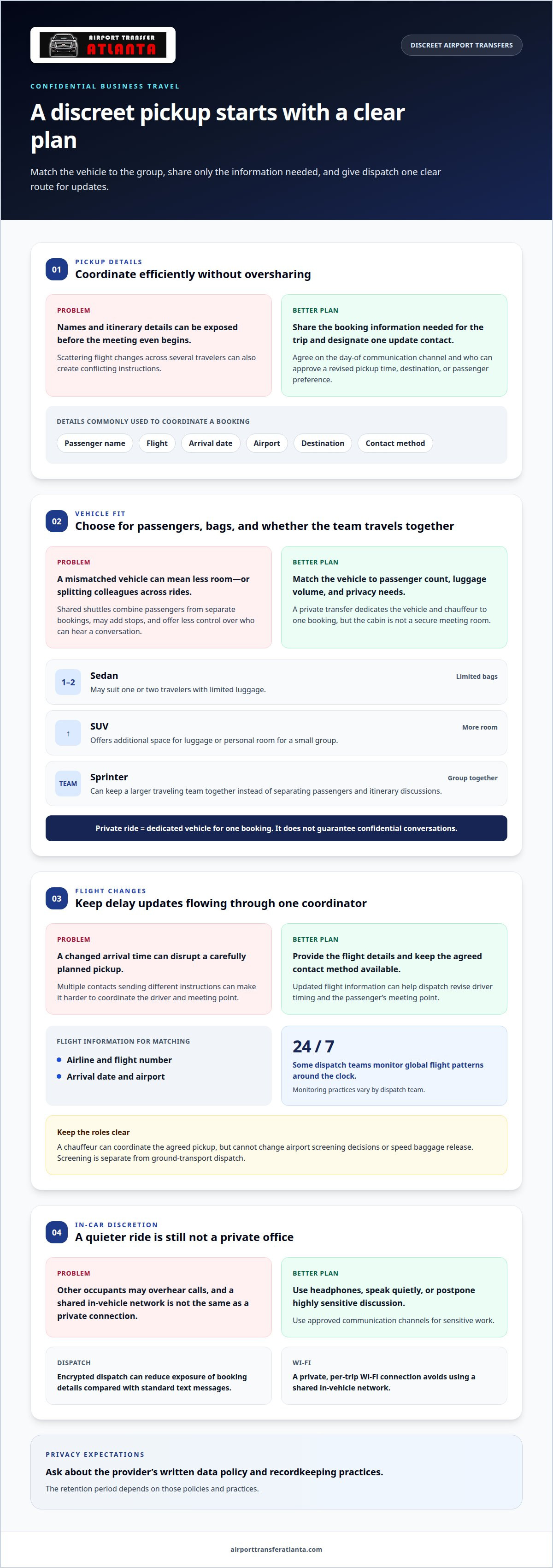
For a group, match the vehicle to passenger count, luggage volume, and privacy needs. A sedan may suit one or two travelers with limited bags. An SUV offers more room when colleagues bring additional luggage or need personal space. A Sprinter can keep a team together, rather than separating passengers and itinerary discussions across vehicles.
A private transfer uses a vehicle and chauffeur for one booking. Shared shuttles combine passengers from separate bookings, which can mean additional stops and less control over who hears a conversation. A private ride gives the group a dedicated vehicle, but it does not make the cabin a secure meeting room. Airport Transfer Atlanta offers private, chauffeur-driven transfers, not shared shuttle or self-drive rentals.
For confidential business travel, dispatch practices matter alongside vehicle size. Encrypted dispatch can reduce exposure of booking details compared with standard text messages. A private, per-trip Wi-Fi connection avoids using a shared in-vehicle network. These options support discretion, but travelers should use approved communication channels for sensitive work.
Airport screening is separate from ground transportation. The Transportation Security Administration limits other liquids, gels, and aerosols in carry-on bags to 3.4 ounces or less. Passengers may request private screening with a companion of their choice; a second officer of the same sex will be present. Screening requests can add time before reaching the terminal pickup point.
Cost depends on the trip’s distance, duration, vehicle type, and booking needs; a quote request determines the applicable price. Airport transfers typically require itinerary and pickup details, such as the passenger’s name, flight, arrival date, airport, destination, and contact method. The retention period depends on the provider’s written data policy and recordkeeping practices, so privacy expectations should be addressed in that policy.
How do professional airport transfer providers handle flight delays for pickups?
Flight monitoring begins with the itinerary: airline, flight number, arrival date, and airport. Dispatch uses those details to match the booking with the correct inbound flight. Some dispatch teams monitor global flight patterns 24 hours a day, 7 days a week. When an arrival time changes, updated flight information helps dispatch revise the pickup plan. That can include adjusting the driver’s timing and the passenger’s meeting point.
Delay response also depends on who receives updates. A designated coordinator can serve as the primary contact instead of distributing itinerary changes across several travelers. Before travel, agree on the day-of communication channel and the details needed for monitoring. Clarify who can approve a revised pickup time, destination, or passenger preference. If a flight diverts or changes, the coordinator can relay the revised information, giving dispatch one clear source and reducing conflicting instructions to the driver.
Airport passenger screening is separate from ground-transport dispatch. Flight status can help dispatch coordinate the vehicle plan, but it does not determine a passenger’s screening outcome. Airport screening and aviation security remain part of airport and government processes. A chauffeur can coordinate the agreed pickup, but cannot change screening decisions or speed baggage release. Keep the agreed itinerary contact method available if screening or arrival processing changes the expected pickup sequence.
International arrivals can add timing variables between landing and curbside pickup. The U.S. Department of Homeland Security describes enhanced aviation security measures at airports in more than 100 countries. Arrival procedures and baggage collection may affect when a passenger reaches the meeting point. Set the pickup plan around a clear location and a coordinator who can receive updates. For a more organized arrival, use structured airport pickup planning to align flight details, contact routing, and meeting instructions.
What Is an Airport Transfer?
An airport transfer is prearranged ground transportation between an airport and a destination. A booking sets the vehicle, pickup plan, and passenger details before arrival.
Chauffeur, Vehicle, and Luggage Handling
The chauffeur operates the assigned vehicle and coordinates the planned pickup, while the booking records passenger and luggage needs. These details help match the vehicle to the trip. For example, a group with several bags needs a vehicle with capacity for both the passengers and luggage. Accurate information helps avoid separating bags or adjusting the ground plan after arrival.
Vehicle Selection and Fleet Diversity
Vehicle selection means matching the passenger’s itinerary and luggage to a suitable class of vehicle. An executive sedan can suit an individual traveler, while an SUV accommodates additional bags or a small group. A Sprinter can keep a larger traveling team together. Vehicle availability can tighten on short notice, especially when confidentiality preferences limit suitable assignments, so advance booking helps organize the requested arrangement.
Executive Transportation at Major Airports
Chauffeur-driven airport transfers provide a planned ground connection without requiring the traveler to drive a rental vehicle or coordinate separate rides. The right vehicle depends on passenger count and luggage. Airport Transfer Atlanta offers a Lincoln MKT, GMC Yukon XL, and Luxury Mercedes Sprinter, with capacities suited to different group sizes. A clear booking gives the chauffeur the information needed for the pickup.
Confidential Conversations and Booking Timing
A vehicle can provide a quieter setting, but passengers shouldn’t treat it as a private office. Other occupants may overhear calls, so use headphones, speak quietly, or postpone highly sensitive discussions. Confidentiality preferences can reduce vehicle and driver availability on short notice. Standard weekday transfers are commonly booked 24-48 hours ahead, while holidays and major events call for 1-2 weeks’ notice.
How professional chauffeurs coordinate airport pickups for confidential travel
A confidential airport pickup starts with a controlled flow of itinerary details. Dispatch needs the passenger’s name, airline, flight number, arrival date, pickup airport, destination, and a reliable contact method. A designated coordinator can provide these details, receive updates, and communicate changes. The chauffeur needs operational information for the assigned trip, not the client’s meeting purpose or full calendar.
At a public terminal, the meeting identifier can protect a passenger’s full name from display. A pickup sign may show initials, a company name, or another agreed identifier. The coordinator and chauffeur should use the same agreed meeting point and contact channel. For a meet-and-greet arrangement at O’Hare or Midway, the chauffeur meets the passenger inside baggage claim and walks with them to the parking lot.
For a multi-stop itinerary, dispatch can share pickup points in sequence rather than giving every staff member the full route. A trip coordinator should also name a backup contact and clarify which changes that person can approve. This gives the chauffeur a clear communication path if the primary contact is unavailable. For private aviation, the coordinator supplies the fixed-base operator location and arrival details needed to arrange the ground pickup.
Pickup location is another privacy decision. Where airport procedures allow, a pickup point away from crowded lobbies or public curbside queues may help limit exposure. Confidential handling depends on limiting shared details and keeping instructions consistent, not on making the journey invisible. A coordinator can align the passenger, flight, itinerary, and destination information before arrival, then route day-of updates through the designated contact.
For a planned, direct airport pickup, arrange a coordinated airport transfer with the itinerary and preferred meeting instructions.
Airport Transfer Atlanta
Airport Transfer Atlanta provides prearranged transportation for travelers who need a clear pickup plan and a direct ride to their destination. A One Way Airport Transfer suits a point-to-point airport journey, while an Hourly Limo Rental supports schedules with multiple stops or changing plans. Share the arrival details, passenger count, luggage needs, and pickup preferences when arranging the ride.
Vehicle options include Lincoln MKT and Cadillac XTS sedans, plus GMC Yukon XL and Cadillac Escalade SUVs. Choose according to the group’s space requirements and itinerary. These services can support executive ground transportation, but sensitive conversations still require care inside any vehicle. Contact Airport Transfer Atlanta to discuss your airport transportation needs.
Plan Your Next Arrival with Clarity
For an airport transfer for confidential business travel, define the communication plan before departure. Decide who can authorize itinerary changes and which channel should carry updates. This preparation helps keep transportation decisions separate from sensitive business discussions.
An airport transfer for confidential business travel works best when the booking details reflect the actual schedule. Align the pickup plan with arrival timing, meeting commitments, and a backup contact. Keep highly sensitive calls for an appropriate setting rather than treating the vehicle as a private office.
When you’re ready to arrange ground transportation, share your pickup needs and travel plans with Airport Transfer Atlanta. Contact Airport Transfer Atlanta to discuss your trip and take the next step with a clear plan.
Frequently Asked Questions
Are your chauffeurs professionally vetted and insured?
Airport Transfer Atlanta’s chauffeurs are well-trained, well-groomed, licensed, and regulated, and the company is fully licensed and fully insured. These facts address professional licensing and company coverage. For business travel, distinguish the assurance you need, such as driver licensing or company insurance, from any separate requirements for individual vetting.
Can I book an hourly service instead of a point-to-point transfer?
Yes. Hourly Limo Rental suits schedules with several stops or gaps between appointments, rather than one direct airport-to-destination trip. One Way Airport Transfer fits a point-to-point journey. For example, an executive visiting separate offices can book hourly transportation instead of coordinating separate rides. This option is useful when the day’s itinerary may shift.
Do you offer corporate accounts for frequent business travelers?
Airport Transfer Atlanta supports business trips through one-way transfers and hourly rentals; corporate accounts involve separate billing and administration. These booking formats cover transportation, not corporate account terms. For recurring travel, keep the booking contact, passenger, and payer details aligned with your company’s expense process. That helps route billing internally without adding unnecessary itinerary information to each reservation.
What airport transfer options offer privacy for confidential business travelers?
A private, chauffeur-driven airport transfer is the relevant option when a business traveler wants a dedicated vehicle rather than sharing a ride with unrelated passengers. A sedan may fit an individual itinerary; an SUV or Sprinter can suit groups with different space needs. For an assistant arranging the trip, separating the booking contact from the passenger can also keep coordination organized.
How do executive car services protect passenger confidentiality and personal data?
Executive services can support confidentiality through documented policies and access controls, not the vehicle label alone. Useful measures include encrypted booking systems, role-based access to trip records, written data-handling and destruction rules, and a designated contact path. Share only operational details needed for dispatch, and use approved channels for sensitive matters. A vehicle cabin doesn’t guarantee private calls or screen content.
What security features should I look for in a business airport transfer?
Prioritize a documented confidentiality process. Relevant measures can include a nondisclosure agreement, a written data policy, a staff-vetting summary, encrypted booking, and a plain-vehicle option. These address different concerns: information handling, personnel access, and public visibility. They don’t replace sensible communication practices during the ride. Match each measure to the sensitivity of the itinerary and the business information involved.


